The Oxenaforda Set
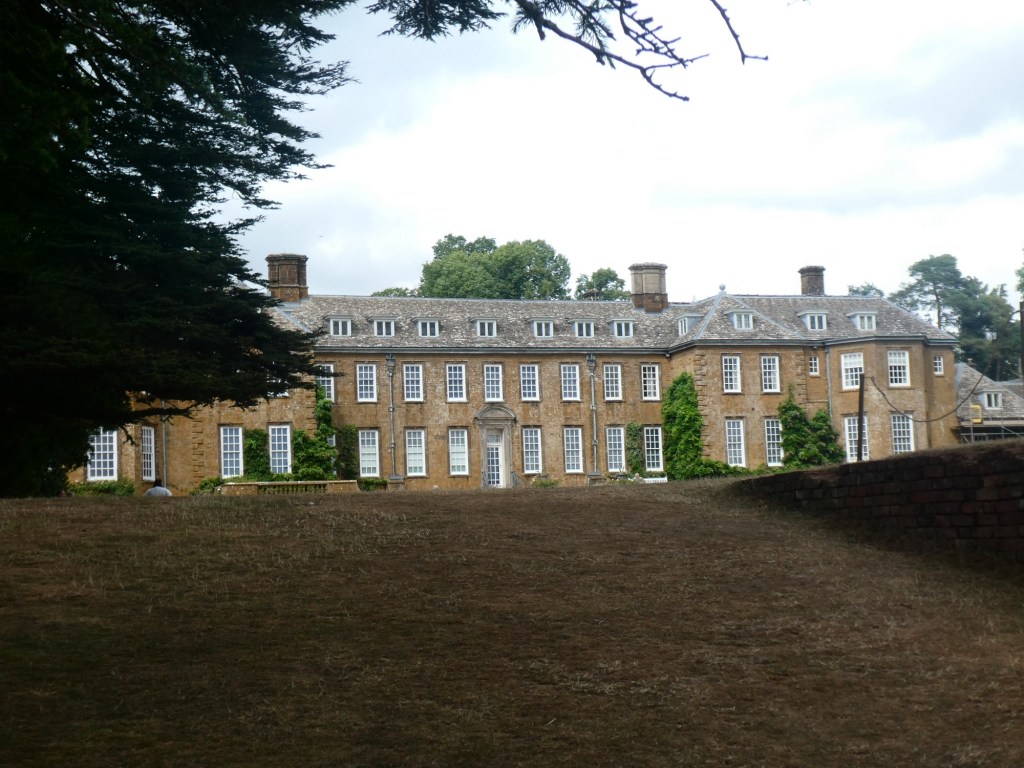
Harold and Thelma Perceville did not mind ghosts; in fact, they enjoyed the company of the various departed souls who shared their sweeping Waeringshire country pile, but there was one apparition that disturbed even them.
Every morning, a jet-black 1926 Bentley faded onto the long path leading from the house to the main road, only to crash into the gate at the end and disappear.
The Percevilles would be okay with this had the vision not been accompanied by piercing screams.
“I know you’re not a fan of exorcisms, sugar,” Thelma said to her husband over breakfast. “But seeing that car crash every morning freaks me out.”
“You’re right, dear,” Harold said, wincing as the screaming, screeching, and eventual crunch against metal played out in the grounds. “It is a rather disturbing sight, isn’t it?”
“Do you know who died in the crash?” Thelma asked, daintily cutting up her deviled egg. “They weren’t your ancestors, were they?”
“I don’t know,” Harold said, sipping on his orange juice freshly pressed from the Orangery. “We may need to investigate. Father might be able to shed some light on the situation.”
“Yeah, that’d be good,” Thelma said. “But Ambrose is a sceptic, isn’t he? Won’t he think you’re off your rocker?”
“He may dismiss any ghost sighting as hysteria on our parts,” Harold said, eating some of his kippers. “But if I mention an interest in family history, father will happily entertain our curiosity.”
“What if there are skeletons buried underneath the drive?” Thelma said. “A burial in the church may be the only way to get rid of them.”
“I’m sure the gardener could dig them off,” Harold said, grinning. “Or we could see if Alice wouldn’t mind making the journey up from Kernow.”
Thelma frowned at Harold and groaned. “Let’s go with the gardener. I’m not in the mood for trying to defend myself with libtards.”
“Very well,” Harold said, finishing his orange juice. “I will ask my father whether he has any recollection of horrific car accidents at Perceville Hall, and then we will go from there.”
Thelma leaned back in her chair and sighed. “That sounds good. Anything to not wake up to the sight of a spooky car crash every morning.”
There was another wail, and the dining room door swung open and slammed shut.
The Percevilles watched it in silence.
“It’s wise not to mention exorcisms in front of Monty, Thelma,” Harold said, glaring at his wife. “We don’t want him to think we’re plotting to do away with him, do we?”
“Oh yeah,” Thelma said, leaning back in her chair and calling to the void. “Sorry, darlin’. I wasn’t talking about you.”
Distant wails, stomps, and slamming doors echoed across the first floor of the hall.
“He’s fine,” Harold said, munching on some sausage. “We can focus on the car accident now.”
“We could lay a trap?” Thelma said. “Then we could have a closer look at the people in the car.”
Harold narrowed his eyes. “That’s not going to be effective, darling. The car would swim through whatever obstacle we lay in front of it.”
Thelma shrugged. “We could do it anyway, and look through the windscreen as it hurtles towards us?”
Harold stared at his wife, and sighed. “I suppose it’s worth a try.”
With that, the Percevilles finished their breakfast and left their household staff to clear up the mess as they got to work on trapping the apparition outside.
A few hours after breakfast, the Percevilles trekked down their ludicrously long driveway up to the gate at the far end and held a linen sheet between them.
They had set the trap; now all that remained was to wait for the phantom vehicle to reveal itself.
“I’ve no idea what good you think this will do,” Harold said, glancing at his wife.
“‘Cause the car’s gonna drive into it, duh?” Thelma said, a sly grin on her face. “How else are we gonna know who crashes into our gate every morning?”
Harold glanced at the empty road through the gates. “At least there are no protestors outside today.”
“Yeah,” Thelma said, laughing. “If only the libs stayed at home every morning.”
The glossy Bentley faded into view in the front of the hall, and sped towards the couple.
“Look, it’s coming now!” Thelma said, pointing at the apparition. “Spread the sheet out.”
“This isn’t going to do anything, but oh well,” Harold said, straightening out the sheet.
Thelma’s heart raced as she heard the yells and screams coming from the car.
Her skin ran cold as she locked eyes with the terrified woman in the front passenger seat, both knowing her fate.
She recoiled as the car hurtled towards her, whilst Harold observed the car without emotion.
The Bentley hit the gate with a crunch, and Thelma flinched.
“What did I tell you?” Harold said as he folded up the sheet.
Thelma stared at the gate wide-eyed, her jaw hanging off its hinges. “How come the car hit the gate anyway?”
“Because it was never physical,” Harold said, placing the folded sheet to one side and rubbing his hands. “It’s a residual haunting; an eternal repetition of a tragic historical event.”
Thelma gawped at Harold, and gulped. “I saw the terror in that woman’s eyes; I doubt her face will ever leave my memory.”
“There was certainly malice in the driver’s oculi,” Harold said. “He deliberately drove into the gate, murdering his passengers.”
Thelma’s lips curled. “How can you be so calm about all this?”
“Because there’s nothing we can do,” Harold said, shrugging. “Those people died over eighty years ago.”
Thelma gazed at the honey-coloured facade of Perceville Hall as the front door opened and slammed shut on its own.
“Except end the haunting,” Thelma said. “So what do you say, get an exorcist?”
Harold pointed his nose towards the sky and turned on his heels.
“First we need to consult my father,” Harold said, sauntering up the path. “And see how long it takes for him to spout some guff about the stone tape theory.”
Thelma jogged behind him, trying to keep up but failing.
Eventually, the two of them slipped into the hall, and, for a moment, a blissful silence enveloped the hall and small patch of Waeringshire countryside that surrounded it.
That evening, Ambrose Perceville, 9th Earl of Waering, and his wife Margaret, Countess of Waering, made the impromptu half-hour journey up to their son’s house to visit him.
“Father, did Hugo ever tell you stories about Perceville Hall in the 30s?” Harold said, sprawled over an armchair.
“Ah,” Ambrose said, elegantly sipping a cup of tea. “I knew you didn’t invite us out of mawkish sentimentality.”
Thelma leaned forward in her chair, glaring at her father-in-law. “Well, Lord P, did he?”
Ambrose gazed at the ceiling. “I suppose he did recount this rather amusing anecdote about a rodent that scurried about in the garden.”
Harold narrowed his eyes and sighed heavily. “Did he tell you anything that was more eventful?”
Ambrose jerked his head back. “I say, Harold, you were never one to entertain our stories from the fireside before. You haven’t been diagnosed with a terminal illness, have you?”
Thelma glared at Ambrose. “He doesn’t, Ambrose. We’ve got a mystery on our hands, and you’re gonna help us solve it.”
Ambrose gawped at his daughter-in-law with wide eyes. “Come again?”
Harold took a deep breath, gulped, and exhaled. “Thelma and I are haunted by a residual apparition of a fatal car accident, possibly happening in the thirties, judging by the clothing of the people in it.”
“We think it happened whilst Grandpa P owned the hall,” Thelma said. “I take it your dad thought you were too sensitive to hear about it.”
Margaret stared at her son with bulging eyes, holding her cup of tea halfway to her mouth.
Ambrose leaned forward and lowered his head. “I should have anticipated that you’d raise the subject of your spectral lodgers at some point.”
Harold glanced at a pale boy silently staring at him from the room housing the Pereceville’s porcelain collection, and nodded at him.
The boy slipped away, and Harold turned to his parents.
“Harold, we have to be honest with you,” Margaret said, closing her eyes to compose herself. “If you weren’t the Traditional Party’s only hope of regaining a majority in the Commons, we would have committed you to an asylum years ago.”
Thelma scowled at her mother-in-law. “The ghosts are real, Lady P, I can see them too. You’ve just chosen to ignore them.”
Margaret observed Thelma over her nose. “That’s fine. I’m sure Broadmoor does padded cells for couples.”
Harold drew in slow, steady breaths, and smiled falsely. “Did Hugo tell you anything about any dinner parties resulting in a fatal car crash?”
Ambrose arched his eyebrows and did a double take. “Of course not. Do you take your grandfather to be a man morbid enough to recount personal tragedies to his child?”
Harold lay back in his seat and rubbed his face.
“Right! Enough now!” Margaret said, clapping her hands. “I propose we forget about the whole sorry affair and go for a walk around the gardens.”
“Now that I think about it, I do have vague memories of my father scribbling in a diary of some sort,” Ambrose said, finishing his tea. “He may have transferred troubling thoughts in his head onto its pages.”
Harold and Thelma stared at each other with gaping faces, and broke into giggles.
“Oh, so that’s sorted everything out, has it?” Margaret said, sighing and throwing her hands in the air. “I give up.”
“Do you know where Hugo may have kept his diaries, Father?” Harold said, leaning towards Lord Waering.
Ambrose glanced at the library on the floor above him.
“The drawers on the Lord Brooke Desk are locked, and I’ve never been able to open them,” Ambrose said. “His secret diaries might be in there.”
Harold’s eyes brightened as his mouth formed a wide smile. “Fortunately, I found the key eighteen months ago.”
Thelma glanced at her husband. “We can check for the lost diary.”
Harold leapt out of his armchair and strode towards the stairs. “Then we must read them. We have no time to lose.”
Thelma propelled herself towards her husband. “You coming?”
Ambrose groaned as he eased himself out of his armchair. “Wait for me. I’m not as fast as I once was.”
Margaret sat frozen in her armchair before grunting and marching after the others. “You’re not expecting me to miss out on the fun, are you?”
A great peace filled the room, and a ray of sunlight flooded through the huge windows onto the floor.
Two generations of one of Saxonia’s great aristocratic families gathered around the antique Lord Brooke desk, where the heir apparent to the Earldom of Waering had done his work since Hugo built Perceville Hall.
“I probably should have thought of this earlier,” Harold said as he slowly creaked a drawer open. “It would have saved you two the journey.”
“Don’t mind us, son,” Ambrose said, pouting at the desk. “We do so enjoy visiting our son every so often.”
Harold sifted through the drawer until he came across a dusty, leather-bound book.
“Ah,” he said, raising his eyebrows. “We may be in luck.”
Harold slowly prised the tome from the drawer, and blew the dust off it.
His entourage coughed and wafted the dust cloud away from them.
Ignoring the commotion, Harold calmly opened the book and shifted through the pages.
“What does it say, sugar?” Thelma said, leaning over Harold’s shoulder.
“I don’t know; the dates seem to match the passenger’s clothing, at any rate,” Harold said, perusing the stained parchment.
Lord and Lady Waering were starting to get restless when something caught Harold’s eye: a diary entry beginning 24th August 1936 – my wife and I held a dinner party today, which ended in disaster.
Harold glanced at his party.
“That could be anything, snoodle,” Margaret said, tilting her head and frowning at her son, gently caressing his back. “The crockery might have smashed, or the guests had a previously unknown allergy.”
“Don’t be ridiculous,” Ambrose said, scoffing. “Allergies are a new phenomenon now that society has become weaker and more indulgent.”
“Read on, sugar,” Thelma said, gazing into Harold’s eyes. “This might be what we’re looking for.”
Harold cleared his throat and read on.
Matilda and I had invited Terrence and Virginia Thompson from the village, and the whole event went along swimmingly.
“But then the butler brought out the wine, and it wasn’t to their taste,” Margaret said. “Right, let’s put the book away and get some fresh air in the grounds.”
The wine was to their taste. Harold side-eyed his mother, who merely shrugged. And we had a good game of croquet.
“This is a rather banal diary entry, Harold,” Ambrose said. “My forebear’s clearly had a pleasant life, but not one that generates much interest for posterity.”
But their chauffeur was somewhat aloof, lurking in the shadows and silently observing the guests.
Ambrose’s eyes bulged. “The chauffeur stayed behind at the party?! What on earth was Hugo thinking?”
“Now do you get it?” Thelma said, glaring at Ambrose.
I thought nothing of it until it was time to bid our guests farewell. The chauffeur told us not to send the footman to open the gate, saying he would do it himself.
Harold glanced at Thelma. “Deliberate murder,” he whispered to her.
I allowed him to do so, but then realised my mistake when he started the Thompsons’ Bentley and hurtled towards the gate.
“Ah,” Ambrose said, lowering his head and frowning. “It appears I owe both of you an apology.”
Matilda and I ran towards the car, trying to stop it, but it was too late. The car crashed into the gate, killing everyone inside.
“But why do we just see the car?” Thelma said. “Surely Hugo and Matilda running after it is an important part of the story.”
“Hugo and Matilda weren’t killed in the crash,” Harold said. “It’s only the souls of the departed that are left.”
Harold read the rest of the diary entry. Matilda and I have hastily buried their bodies by the driveway, in the hope that no one questions their disappearance. Fortunately, no one has so far, and Matilda and I hope to forget the whole thing ever happened. After all, some things are best left unremembered.
Harold snapped the diary shut, tentatively placed it in the drawer, and locked it again.
He stared vacantly at the desk.
“Tragedy envelops this house,” Harold said, frowning. “A fact that everyone who inherits it has to come to terms with.”
The Percevilles stood in an uncomfortable silence, which was only broken by Monty wailing and slamming a door.
Ambrose jumped. “Good God, what was that?”
“That’s just Monty, father,” Harold said. “He means you no harm.”
Ambrose stared at his son, his skin pallid and wet.
“Right,” Margaret said, clapping her hands. “Time for a walk round the grounds.”
“Yes,” Harold said. “We shall.”
Harold brushed past his parents and jogged down the spiral staircase downstairs, tailed by his wife.
Ambrose and Matilda glanced at each other and trod down the steps behind them.
A week after Lord and Lady Waering’s visit, Harold and Thelma’s friends Ben and Alice Jones visited them from Kernow.
The Perevilles told them about their residual apparition, and whilst Ben lectured them about the stone tape theory, Alice listened attentively.
Thelma was somewhat unnerved by Mrs Jones’ sympathy, as she was used to defending her right-wing views whenever they broached the topic of politics, but she was appreciative in this instance.
Being an archaeologist, Alice agreed to excavate the grassy bank lining the driveway towards the hall.
Over the next few hours, Alice tentatively dug a hole until three skeletons emerged from the soil.
“So, Benjamin,” Harold said, glancing at Ben. “Does the stone tape theory still add up?”
“Of course,” Ben said, grinning. “The traumatic cause of death clung onto the human remains, as it did the trees and buildings around us, projecting it for certain people to see.”
“D’you think the church will accept these bones?” Thelma said, gazing into her husband’s eyes.
“I don’t see why they wouldn’t,” Harold said. “I personally wouldn’t be opposed to organising a memorial service for them.”
“That’s very compassionate for you, Harry,” Alice said, crossing her arms and glaring at him.
“Just because I’m a conservative does not mean I’m completely devoid of humanity, Alice,” Harold said.
“No, you just show empathy to those you deem worthy,” Alice said, raising an eyebrow.
Ben stood between Alice and Harold, breaking them up.
“Ok. Let’s focus on exhuming these unfortunate souls and transferring them to proper graves in the village,” Ben said.
Thelma sneered at Alice. “You know, Alice, you would’ve got on with the psycho who murdered the Thompsons. He was clearly a fellow Bolshie.”
Alice scowled at Thelma and raised her fist in preparation, but Ben restrained her just in time.
“How about we play a game of croquet, Benjamin,” Harold said, already sauntering towards the hall. “So we can leave Alice in peace to do what needs to be done.”
Ben hugged Alice goodbye and jogged after Harold.
Thelma strolled after them, but not before blowing Alice a raspberry.
Alice glared at her, before carefully exhuming the remains.
The rest of the evening was relatively peaceful, especially after the Joneses had moved on to Laeppa to visit Ben’s parents, and there was not a phantom car in sight.
Harold and Thelma were never bothered by the ghostly car crash again.
In fact, once the skeletons were reburied and a memorial service was held, Harold and Thelma forgot about the whole thing.
After all, as Hugo Perceville once wrote in his diary, some things are better left unremembered.
But, before they forgot, Thelma and Harold sat in the long gallery of Perceville Hall, soaking in the late August sunshine, gazing out at their sweeping gardens with a flute of Champagne each.
“Here’s to starting our mornings in a less lugubrious fashion,” Harold said, clinking his glass with Thelma.
“We did it, sugar,” Thelma said, grinning. “Now all we’ve gotta do is work on getting you into No. 10.”
A wry smile appeared on Harold’s face. “Indeed.”
Invisible feet stomped down the gallery, as doors swung open and slammed shut in unison.
Harold glanced around him and raised his flute. “Here’s to you too, Monty.”
He sipped his Champagne and savoured the fizziness.
Harold glanced at the doorway next to him, and saw the pale boy gawp at him.
“I’ll be done in a minute,” Harold said, smiling warmly. “Then we can resume our game of Billiards.”
The boy grinned and skipped away.
Harold gazed at his wife, and shrugged.
Thelma broke into a fit of giggles.
The sound of someone gagging broke the overall jovial tone.
The Perecevilles glanced at each other with wide eyes, and glanced behind them.
A man, seemingly fresh from an Agatha Christie novel, dropped a goblet onto the ground and fell to his knees.
He clutched his throat, writhing on the floor.
Harold and Thelma ran over to him.
“Are you alright, sir?” Harold said, trying to help him, but realising he couldn’t.
“Should we call an ambulance?” Thelma asked, trembling all over.
Harold stared at her. “No, we’re about a century too late; all we can do is wait.”
As if on cue, the man fell to the ground and dissipated.
Thelma relaxed, sighed, and rolled her eyes. “You’ve gotta be kidding me.”
“Alas, it appears I’m not,” Harold said, staring at the floor with pursed lips.
It seems the living inhabitants of Perceville Hall are forever doomed to have at least one residual ghost cohabiting with them.

